Vibrating Rod Level Sensor

Manufactured by BinMaster & Distributed by Wm. Neundorfer & Co.

The high-sensitivity point-level switch workhorse for light powders, flakes, and fluffy bulk solids in bins, silos, and hoppers — down to 1.25 lb/ft³.

BinMaster’s authorized Vibrating Rob Level Sensor distributor for the Great Lakes region —
65 years specifying the right probe, mount, and shaft extension for your application.
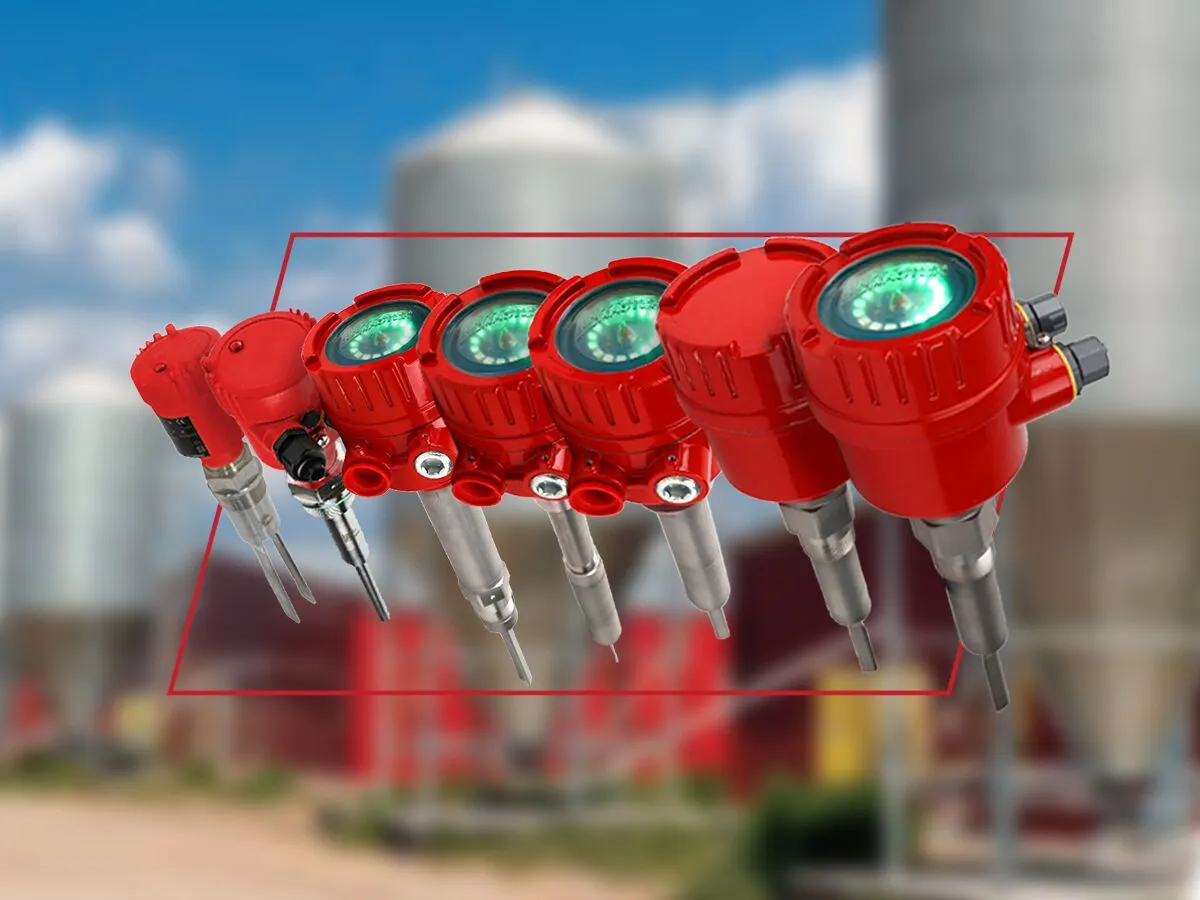
WNC - Vibrating Probes

Get an application-specific recommendation

Tell us about your vessel. Wm. Neundorfer & Co. will spec the right vibrating probe—blade, mount, extension, and process connection—for your material, environment, and mounting location.

Trusted across the Great Lakes region since 1959

Local Inventory
stocked in Painesville, OH

65 Years of
Bulk Material Handling Expertise

Serving the Great Lakes Region
OH, PA, WV, NY

Key Specs

Technology

Vibrating Rod

Piezoelectric — no rotating parts to wear

Bulk Density Down To

1.25 lb/ft³

Light, fluffy, and aerated powders and flakes

Process Temperature

Up to 480°F

High-temperature models available

Why the vibrating probe is the high-sensitivity point-level standard in Great Lakes plastics, food, wood, and powder-handling facilities

Detects the light, fluffy materials a paddle can’t

A blade vibrates at its natural frequency; when material dampens the vibration, the sensor switches. Because it senses motion rather than weight or dielectric, it reliably catches materials as light as 1.25 lb/ft³ — Styrofoam, carbon black, flour, sawdust, plastic flakes — where a rotary paddle may never move.

One sword-blade design that resists buildup and bridging

The slender, sword-shaped blade encourages material to flow past it, resisting buildup and false alarms. Unlike a two-tine tuning fork, a single blade can’t bridge across the gap with sticky or fibrous materials.

No calibration, no dielectric settings

Sensitivity is a single switch inside the housing — high for fluffy materials, low for heavier or clinging materials. There are no dielectric constants to dial in and no signal to aim. Mount it, wire the relay, and it works.

Fail-safe alarm and equipment control

A DPDT relay (5 A, 250 VAC) wires to a light, horn, motor starter, or PLC — high-level shutoff, low-level start, or plugged-chute alarm. A configurable time delay rejects nuisance trips from material brushing past during fill.

Vibrating Probe VRX-21 installed

Models

Three series of BinMaster vibrating probe, all working on the same principle — a blade or rod vibrates at its natural frequency until material dampens it and trips the switch. They differ in blade style, insertion length, temperature rating, and mounting. Tell us about your application and we'll spec the right probe for you.

The newest-generation workhorse and the line most installs use. A buildup-resistant sword blade detects materials as light as 1.25 lb/ft³, with sensitivity set by a single switch inside the housing. Six variants cover standard, sanitary, rigid- and flexible-extended, and high-temperature applications.

Model Highlight Best at
VRX21 The standard vibrating probe.  7.5in blade, adjustable sensitivity, 1¼in or 1½in NPT. The everyday workhorse — top, side, or cone level detection and plugged-chute alarms
VRX31 Sanitary model. Built-in LED status indicator,  Stainless Steel 2in Tri-clamp fitting, clean-in-place compatible, SS extensions to 6.56 ft. Food, dairy, and pharmaceutical vessels with hygienic requirements
VRX41 Rigid pipe extension that can be extended from 13in to 13ft. Built-in LED status indicator. High-, mid-, or low-level detection deeper into the vessel
VRX51 Flexible extended probe. Steel-rope reinforced cable from 19in to 19.5 ft. Tall silos and applications where falling material could fall onto or heavily impact the probe
VRX61 High-temperature model. Harsh environments to 480°F. Hot materials — fly ash, hot cement, kiln and dryer feed
VRX71 High-temperature extended model to 480°F. Extendable to 13.3 ft. Hot materials that also require deeper insertion

Miniature probes — about a 6-inch insertion — for small bins, hoppers, mixers, and tight installations where a full-size VRX won’t fit.

Model Highlight Best at
CVR-600 Compact Model 1in NPT with 6in insertion length, 20 to 250 VAC/DC The smallest bins, hoppers, and mixers in tight spaces.
CVR-600-HTL High Temp Compact Model 1in NPT with 6in insertion length, 20 to 250 VAC/DC, high temp probe assembly for temperatures up to 300°F with 2in temperature insulation lag tube The smallest bins, hoppers, and mixers in high temperature spaces.
CVR-625  Compact Model 1-1/4in NPT with 6in insertion length, 20 to 250 VAC/DC  

Small bins, hoppers, and mixers in tight spaces.

CVR-625-HTL High Temp Compact Model 1-1/4in NPT with 6in insertion length, 20 to 250 VAC/DC, high temp probe assembly for temperatures up to 300°F with 2in temperature insulation lag tube Small bins, hoppers, and mixers in tight, high temperature spaces.
Proven alternatives to the sword blade. A round rod suits coarse or frequently changing materials; a vibrating fork suits fine powders and granules that won’t bridge between the tines. Both offer hazardous-location approvals and stainless housing options for food and pharma.

Model Highlight Best at
VR-90 Standard Rod Model. 4.92in buildup resistant round rod For powders and granules; hazardous-location approvals available
VR-92 Cable Extended Rod Model.  4.92” buildup resistant round rod with flexible cable extension. Available in lengths up to 230in Powders and granules in tall silos and applications where falling material could damage a rigid probe
VR-93 Rod Extended Rod Model. 4.92” buildup resistant round rod and rod extension. Available in lengths up to 120in Powders and granules in high-, mid-, or low-level detection deeper into the vessel
VF-90 Standard Fork Model. 316L stainless steel 5.91in tuning fork Fine powders or granulated materials that will not bridge between tines
VF-92 Cable Extended Fork Model. 5.91in tuning fork with hanging cable extension. Available in lengths up to 240in Fine powders or granulated materials in tall silos and applications where falling material could damage a rigid probe
VF-93 Rod Extended Fork Model. 5.91in tuning fork with rod extension. Available in lengths up to 120in Fine powders or granulated materials in High-, mid-, or low-level detection deeper into the vessel
Probes tuned to detect a settled solid bed beneath a liquid surface — a direct alternative to sight tubes and manual dipping in brine tanks, clarifiers, and process tanks. 
Model Highlight Best at
VR-21 SED Standard Model with a 7.37” insertion length sword-shaped blade that allows material to easily flow by the sensor and settle on the bottom of the tank. Side mounted sediment detection.
VR-41 SED Rigid Extended Model with with extensions from 13in up to
13ft long
Top mounted sediment detection in tall storage vessels.

Still narrowing it down?

Tell us about your vessel and material—we'll spec the right model for your application.

Configure your vibrating probe to your application

Vibrating rod level sensors are used across a wide range of light materials, vessel types, and mounting locations. To ensure reliable detection wherever it’s deployed, each probe’s blade style, mount, and extension is configurable to your application. Not sure which configuration fits? Tell us about your application, and we'll spec the right mount for you.

Vibrating Rod
Type Highlight Best at
Blade (VRX) Build up resistant stainless-steel blade Light, fluffy powders and flakes down to 1.25 lb/ft³; resists buildup and bridging
Round Rod (VR) Single stainless-steel rod Coarse solids and vessels where the material type changes often
Fork (VF) Stainless-steel two-tine fork Fine powders and granules that won’t bridge; sanitary options
Sediment Blade (SED) Stainless-steel blade tuned for settled solids Solids that settle beneath a liquid surface in tanks

Vibrating probes mount on a standard NPT process connection — 1″, 1¼″, or 1½″ depending on model. Top mounting is used for high-level detection, side mounting for high-, mid-, or low-level alerts, cone mounting for low-level or empty detection, and in-line mounting for plugged-chute detection.

  • Top mounting — powder-coated carbon steel plates in 0°, 5°, 10°, and 30° angles to match flat or sloped silo roofs.
  • Side and cone mounting — typically a 0° plate for high-, mid-, or low-level detection on the sidewall or bin cone.
  • Plugged-chute detection — mounted in a chute or transition to alarm when material backs up.

BinMaster machines and assembles custom vibrating probes in-house, typically in just a few days. Common options:

  • Rigid extensions (VRX41) — galvanized, stainless, or sanitary pipe, 13in to 13 ft, for deeper level detection.
  • Flexible cable extensions (VRX51) — steel-rope reinforced, 19in to 19.5 ft; resists impact damage from falling material.
  • High-temperature models (VRX61 / VRX71) — insulated extension tube and optional remote electronics for process temperatures to 480°F.
  • Sanitary extensions (VRX31) — stainless steel to 6.56 ft, Tri-clamp compatible, for food and pharmaceutical vessels.
  • Remote electronics housing — separates the electronics from heat, vibration, or tight spaces (kit includes mounting plate and 20 ft of cable).
  • VR quick connectors — remove and replace a probe without disconnecting wiring, for faster maintenance and less downtime.

Not sure which mount fits your vessel?

Tell us about your vessel type, roof angle, and existing fitting size—we'll spec the hardware for your application.

Industries where the rotary is the point-level standard

Serving industrial facilities across Ohio, Pennsylvania, West Virginia, and Western New York since 1959. Find your application below — or tell us about your vessel and we'll spec the right model.

Plastics and Resins

Styrofoam, virgin and regrind resin pellets, plastic flakes, and ground polymer in day tanks, hoppers, and railcar-unloading silos — light materials a paddle may not detect.

Common fit:
VRX21 for resin storage; VRX41 extended for tall day tanks

Food and Pharmaceutical

Flour, sugar, starch, milk powder, and ingredients under hygienic requirements. Sanitary blade and fork designs with Tri-clamp fittings and clean-in-place compatibility.

Common fit:
VRX31 sanitary (2″ Tri-clamp) for flour and milk powder; VF-90 fork for fine ingredients

Chemical and Mineral

Carbon black, chalk, lime, additives, and light minerals. Where material type changes, a round rod handles the variation; hazardous-location approvals available.

Common fit:
VRX21 for light powders; VR-90 round rod for frequently changing materials

Bioenergy and Wood

Sawdust, wood fines, pellets, bark, and biomass at pellet plants and biomass-fueled facilities. Very-light, aerated materials suited to high-sensitivity blades.

Common fit:
VRX21 (high-sensitivity) for sawdust; VRX51 flexible for tall bins

Cement and Power

Cement, fly ash, carbon black, and lime in batch plants and generation facilities. High-temperature models handle hot ash; blades catch plugged chutes on transfer points.

Common fit:
VRX61 / VRX71 high-temp for hot fly ash; VRX21 for plugged-chute detection

Grain and Feed

Flour, ground feed, DDGs, and meal in feed mills and processing plants. High-sensitivity detection of dusty, light materials plus plugged-chute alarms.

Common fit:
VRX21 for ground feed; VRX41 extended for tall bins

Don't see your exact industry?

Tell us about your vessel and material—we'll spec the hardware for your application.

FAQ

Use a vibrating rod for the lightest, fluffiest, most aerated materials — Styrofoam, carbon black, flour, sawdust, plastic flakes — down to about 1.25 lb/ft³, or where you want no rotating parts. Use a rotary for moderate-to-heavy dry bulk solids (roughly 5–100 lb/ft³) where a paddle is the proven, low-cost workhorse. Use a capacitance probe for sticky, fine, or interface applications with stable dielectric properties. We sell all three — send us the application and we’ll give you the honest answer, not the expensive one.

It senses a change in vibration rather than weight or dielectric. A piezoelectric element vibrates the blade at its natural frequency; when material dampens that vibration, the relay switches. Because almost anything — even fluff around 1.25 lb/ft³ — will dampen the blade, it detects materials too light to turn a rotary paddle and too low in dielectric for some capacitance probes.

Yes — the VRX21, VRX31, VRX41, VRX61, and VRX71 carry C/US Class II, Division 1 approvals for combustible-dust environments such as grain dust, flour, sugar, and plastic powders. The VRX51 flexible probe is rated for ordinary locations. Confirm your specific dust classification and we’ll select the correct unit for your application.

VRX21 is the standard 7.5in stock blade for top, side, or cone mounting. VRX31 is the sanitary Tri-clamp model for food and pharma. VRX41 adds a rigid pipe extension (13in to 13 ft); VRX51 uses a flexible cable extension (19in to 19.5 ft) for tall vessels. VRX61 and VRX71 are the high-temperature models (to 480°F), standard and extended.

Yes. Mounted in a chute or transition, a vibrating probe signals the moment material backs up — a fast plugged-chute alarm. For settled solids beneath a liquid, the VR-21 SED and VR-41 SED are tuned to detect the solid bed below the liquid surface, with VR-41 SED rigid extensions from 13in to 13 ft.

Yes. VRX probes provide DPDT relay contacts (5 A, 250 VAC) that wire directly into virtually any PLC, alarm panel, or motor control circuit — high-level shutoff, low-level start, or alarm. Like a rotary, it’s a point-level (on/off) device rather than a 4–20 mA continuous output; if you need continuous level, ask us about SmartBob or non-contact radar instead.
Yes. The standard size models VRX61 and VRX71 are built for process temperatures to 480°F with an insulated extension tube, and remote-electronics options move the electronics away from heat and vibration. Compact models CVR-600-HTL and CVR-625-HTL are built for processes up to 300°F.  Tell us your process temperature and we’ll spec the right model.

Yes. Wm. Neundorfer & Co. provide application visits across Ohio, Pennsylvania, West Virginia, and Western New York. We’ll look at the vessel, the mounting location, the material, and the wiring path, and you’ll have a written recommendation in your inbox within a few days.